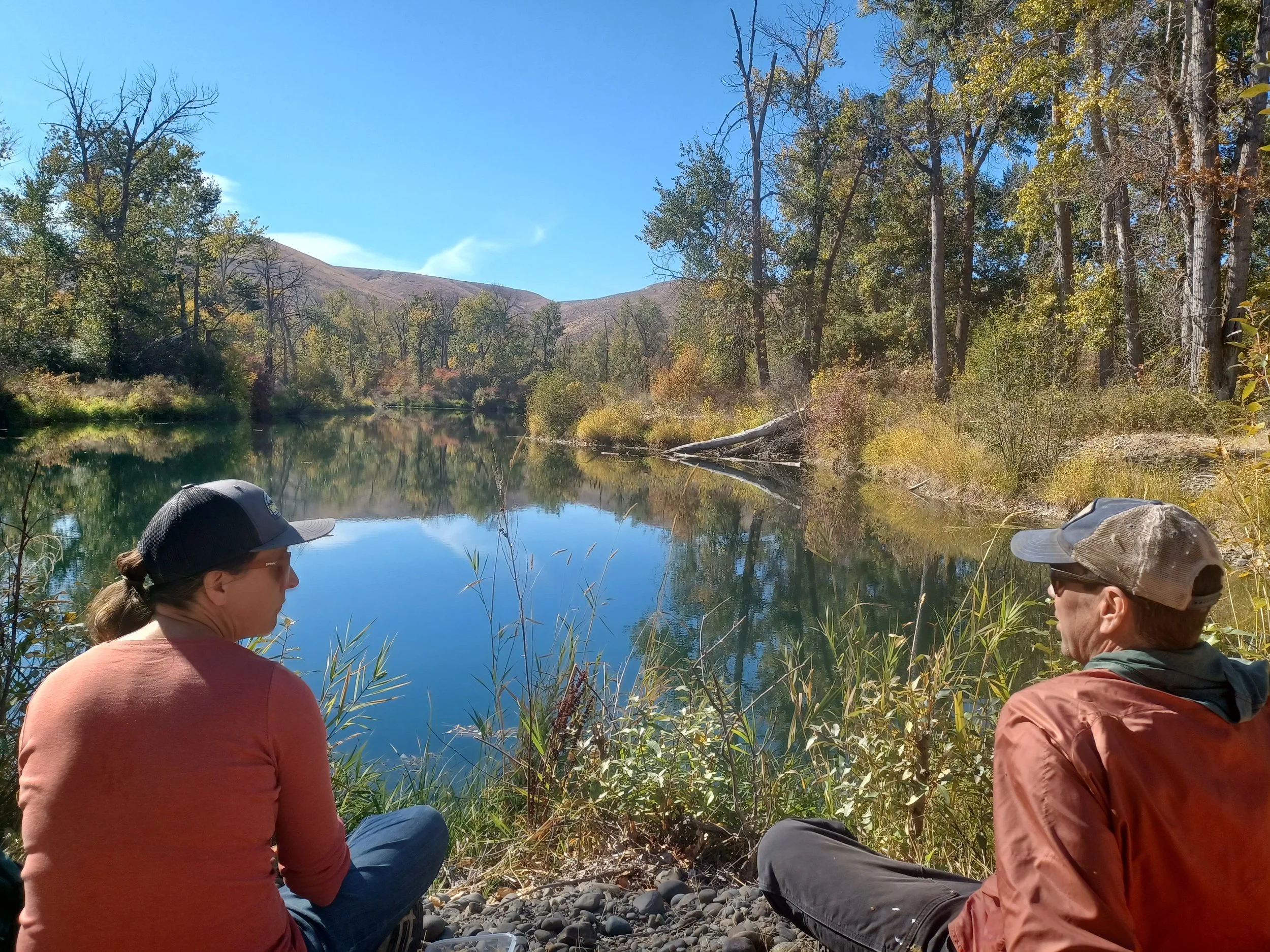
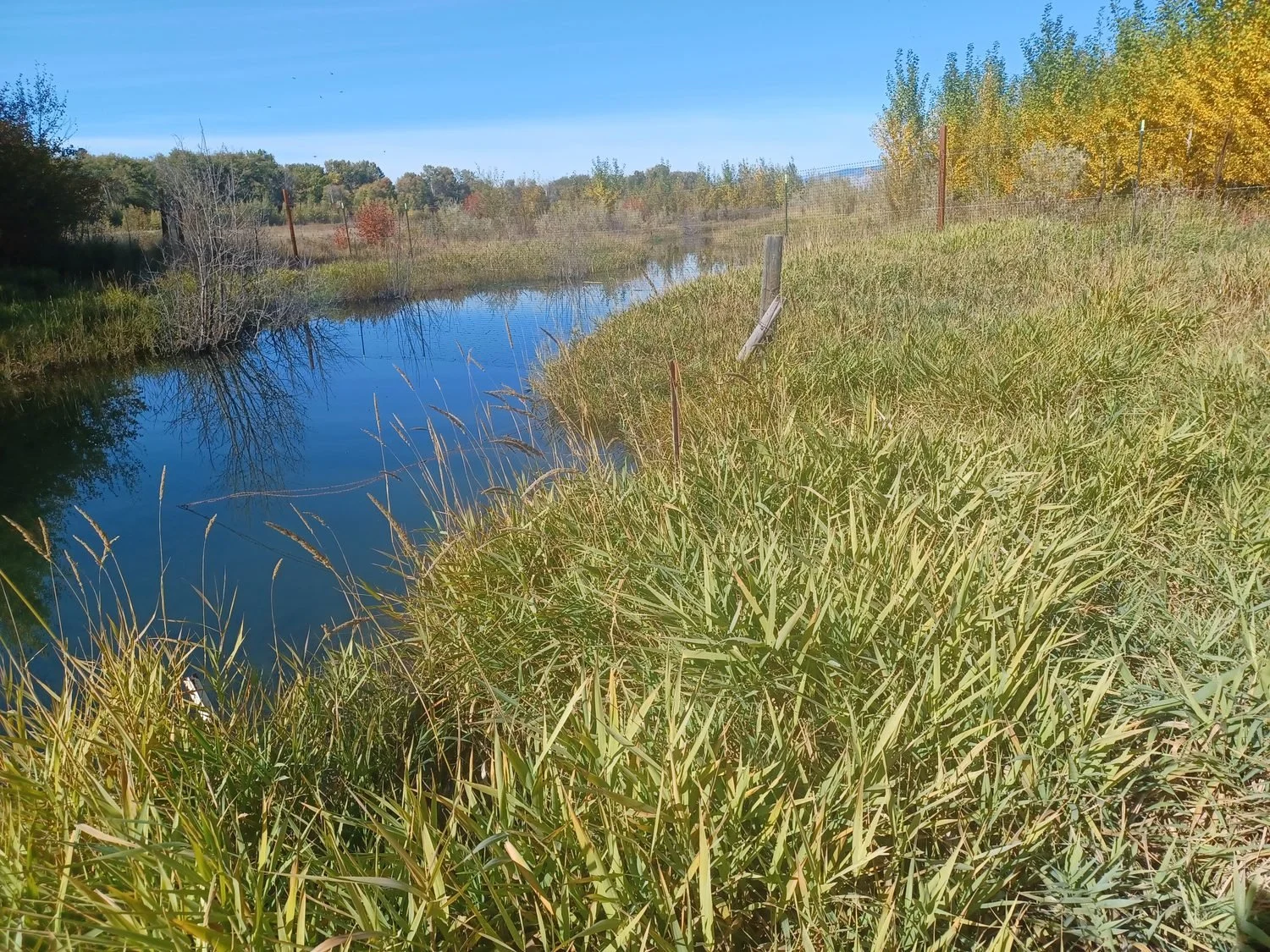
Yakima River. South of Ellensburg.
The Lower Kittitas Floodplain Restoration Project is underway on 650 acres of floodplain located five miles south of Ellensburg, along the Yakima River. The project aims to improve floodplain conditions and enhance habitat for juvenile salmonids by reconfiguring and reconnecting the floodplain channel, and by planting trees along riparian areas.
OVERVIEW
The Lower Kittitas Floodplain Restoration project is underway on 650 acres of floodplain located five miles south of Ellensburg, along the Yakima River. The project aims to improve floodplain conditions and enhance habitat for juvenile salmonids by reconfiguring and reconnecting the floodplain channel and by planting trees along riparian areas.
Expected Benefits
Decreasing the severity of flooding events
Collecting debris
Improving water quality
Moderating water temperatures
Providing diverse side channels
Increasing floodplain roughness
Remediating forest clearing
Restoring shade to side channels
650 Acres of Floodplain Enhanced
The project will benefit Mid-Columbia steelhead, spring chinook, coho, sockeye, bull trout, rainbow trout, Pacific lamprey and other native fish species, in addition to terrestrial and aquatic wildlife species.
Why Plant Early?
Earthmoving for floodplain reconfiguration and reconnection is slated to begin in 2027. However, once floodplain reconnection is complete, it will be difficult for tree-planting equipment to traverse the newly wet landscape. The Lower Kittitas Early Action plantings will get ahead of this issue by planting high-priority reforestation areas with native tree species along the Yakima River.
Fall 2026
Early Action: deep planting of native trees at North Spring Creek and Yakima RM 149.
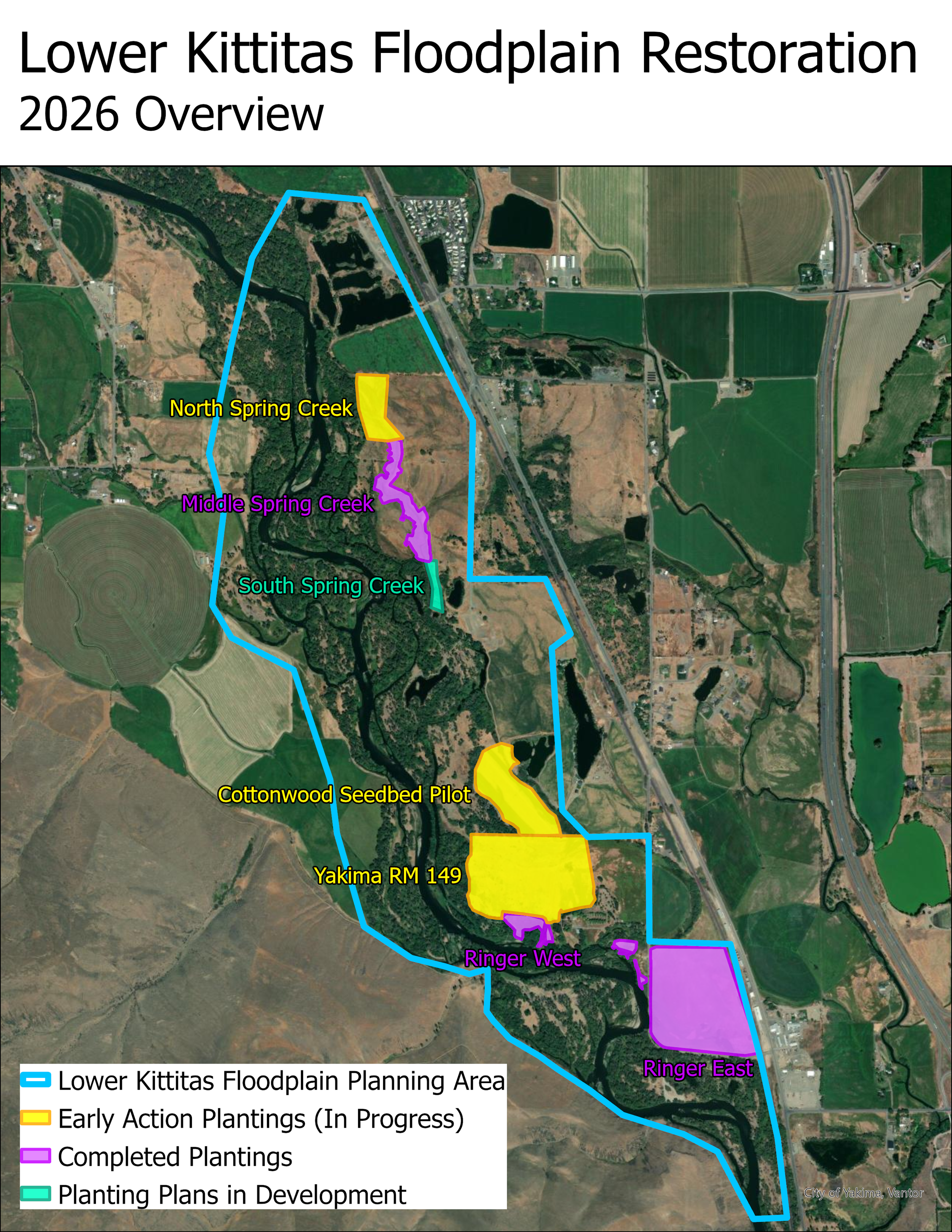
Project map: Early Action plantings (yellow), completed plantings (purple), and plans in development (teal)
After Planting
Native grasses are seeded to reduce invasive plant colonization due to soil disturbance.
2027
Earthmoving begins to reconfigure and reconnect the floodplain channel.
WHAT IS DEEP PLANTING?
In arid central Washington, Mid-Columbia Fisheries often uses deep planting methods to install trees in riparian areas. In deep planting, augering or a hydraulic ram is used to place the roots of riparian trees or shrubs into moist soil, at depths up to 6 feet. This ensures that the plants can access the water table with their roots, thereby eliminating the need to irrigate the plantings to ensure adequate survival.
Plants used in deep planting must be adventitious-rooting species, which have stem nodes that can differentiate into roots when buried in moist soil. This is an adaptation of some riparian plant species, such as cottonwoods or willows. By planting a few feet of the tree’s stem in the ground, we can give the tree extensive soil contact to encourage the growth of new roots that will make contact with the water table
6 ft
Maximum Planting Depth
50-90%
first-year survival
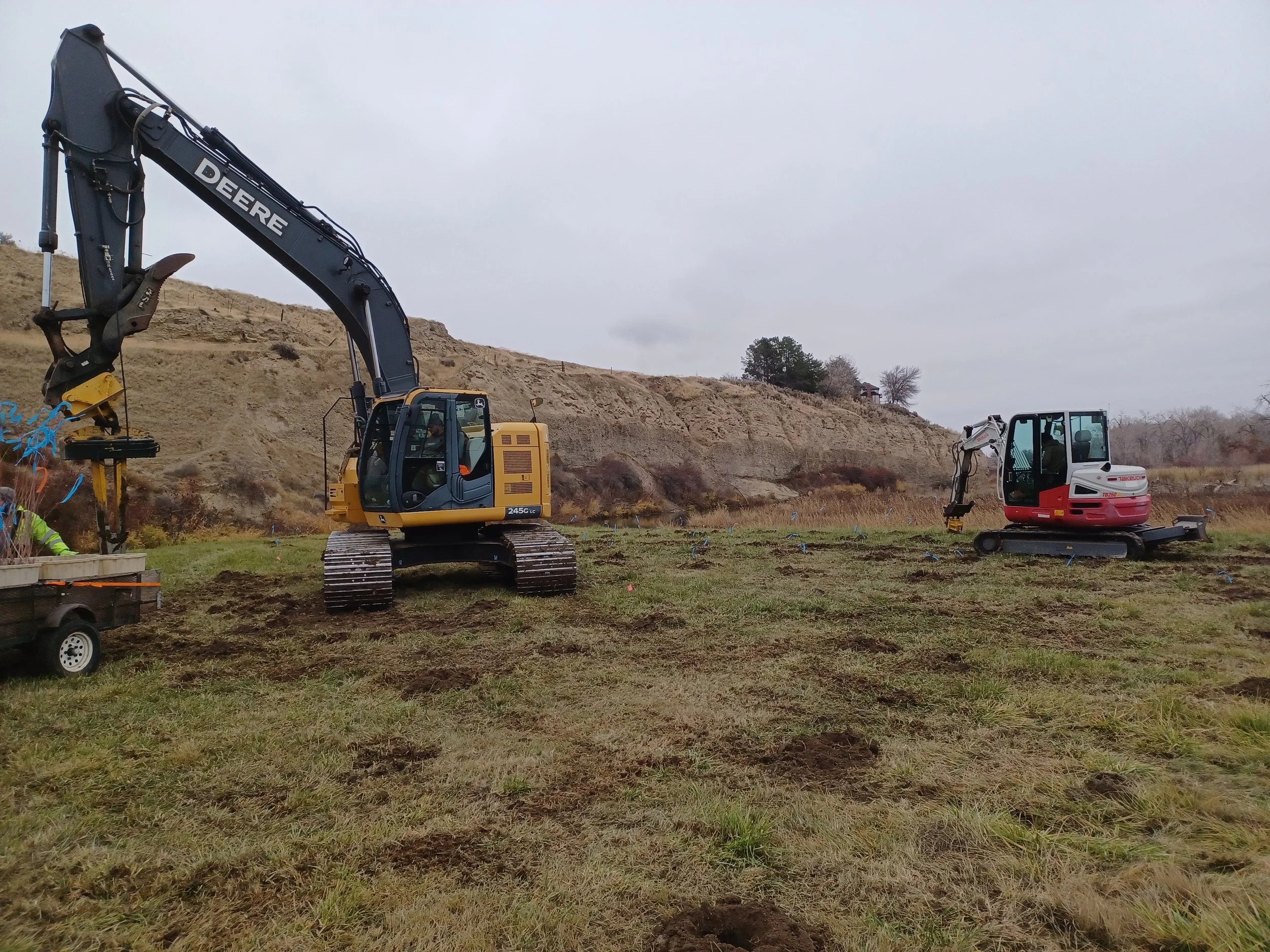
Augering equipment is being utilized at another Yakima river restoration site
EXPLORE THE PLANTING SITES
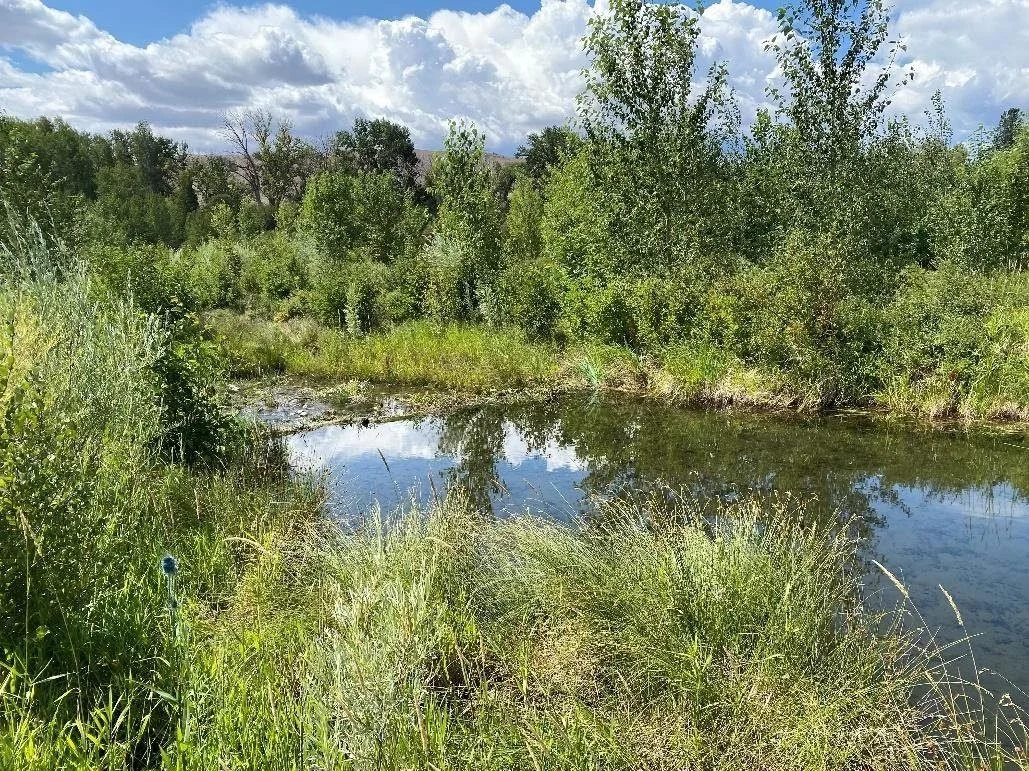
Completed planting
Middle Spring Creek
10 acres - .42 stream miles
Planted in 2020-2022
A 0.42 stream miles long this spring-fed side channel of the Yakima River, riparian trees and shrubs planted by Kittitas County Public Works and Mid Columbia Fisheries now shade the channel and add floodplain roughness that slows high water.
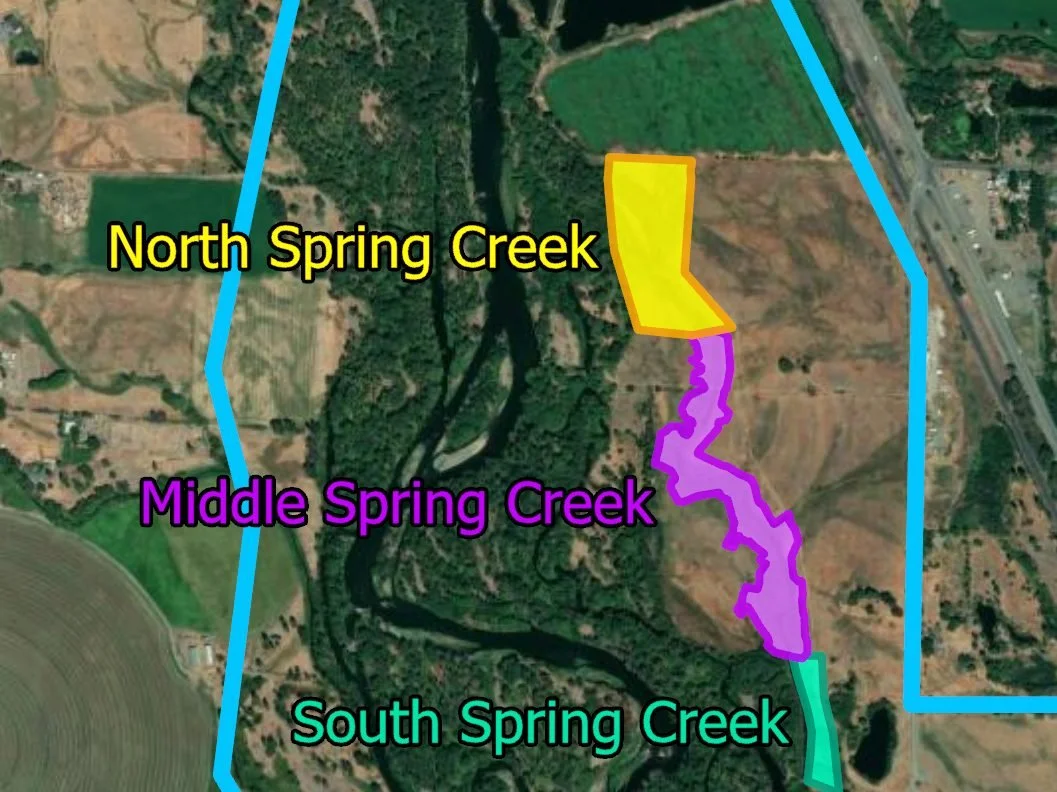
Early Action - Fall 2026
North Spring Creek
5.4 Acres - 2,790 native trees planted
Mid-Columbia Fisheries will deep-plant native trees on 5.4 acres of former grazing pasture to improve floodplain roughness and provide shade for salmonid habitat.
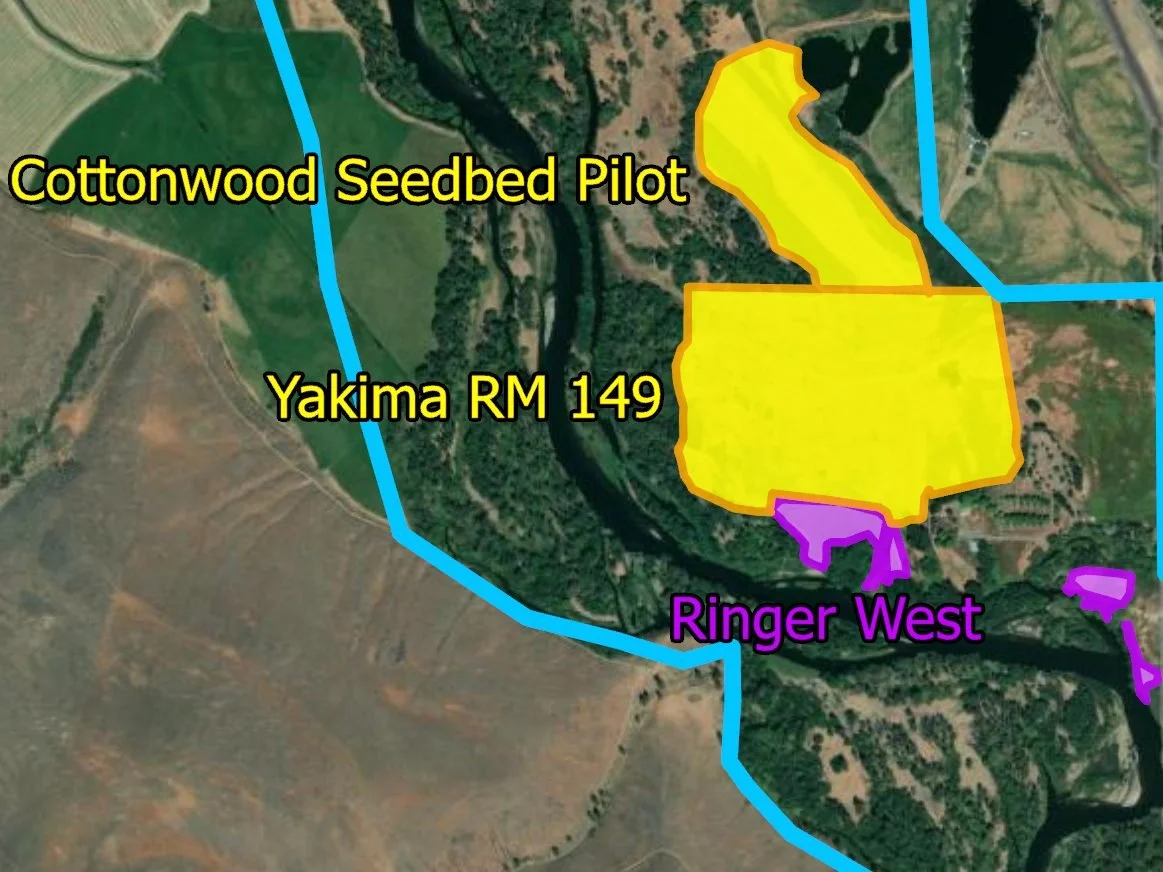
Early Action - Fall 2026
West BLM (Yakima RM 149)
35 Acres - 4,800 native trees
Pasture will be returned to riparian forest through native tree planting, providing floodplain roughness, bank-adjacent shading, and a source of large wood in this dynamic portion of the Kittitas reach of the Yakima River
FUNDING
The Lower Kittitas Floodplain Restoration Early Action project is supported with funding from Washington’s Climate Commitment Act (CCA). The CCA supports Washington’s climate action efforts by putting cap-and-invest dollars to work reducing climate pollution, creating jobs, and improving public health. Information about the CCA is available at www.climate.wa.gov.